 The Republic News News for Everyone | News Aggregator
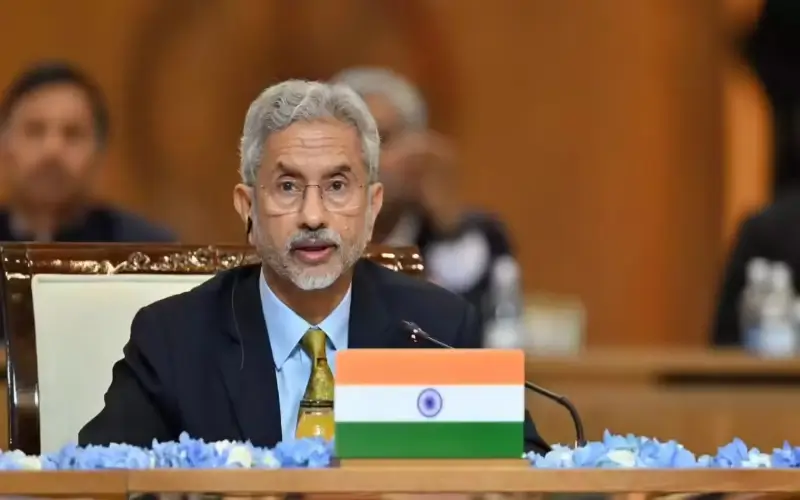
Indian External Minister for Foreign Minister Subrahmanyam Jaishankar came under heavy criticism from politicians for issuing spiteful remarks about Pakistan over the latter’s mediation role in the ongoing US-Israel war against Iran.
The controversy emerged during an all-parties meeting held on March 25, 2026, where Jaishankar allegedly used inappropriate and non-parliamentary language while responding to criticism. According to political observers, the remarks were seen as an attempt to deflect attention from India’s diplomatic challenges, particularly its absence from the ongoing mediation efforts between the United States, Israel, and Iran.
Analysts say New Delhi has not played a visible role in the recent diplomatic initiatives aimed at easing tensions in the region. In contrast, countries such as Pakistan, Türkiye, and Egypt have reportedly emerged as more active diplomatic intermediaries in efforts to reduce tensions.
Critics have described the foreign minister’s statement as unprofessional and non-serious, arguing that such language at a high-level political meeting reflects frustration within the Indian leadership over the country’s limited role in the current crisis. The remarks have also sparked debate in India, where opposition parties and commentators are questioning the government’s foreign policy performance.
Observers note that while global politics requires maturity and strategic engagement, India’s leadership has instead resorted to theatrics, according to critics. Jaishankar’s frustration reportedly shows that India’s importance in the current dispute is negligible, as both public opinion and international observers question the Modi government’s handling of regional diplomacy. Analysts say that weaker states often resort to aggressive or inflammatory language when excluded from major international decisions, and India’s recent rhetoric appears to be an unsuccessful attempt to mask its shrinking global influence.
In contrast, Pakistan has emerged as a reliable and trusted mediator in international crises. The country has been invited by multiple parties to help resolve disputes with confidence, demonstrating a proactive diplomatic approach. Unlike India, which has historically struggled to play an effective mediation role in global conflicts, Pakistan’s diplomatic record is notable. Its achievements include facilitating US-China relations, supporting Jordan, contributing to the Gulf War, maintaining the Saudi-Iran balance, assisting in Iraq, and participating in agreements such as the Doha Accord.
India’s multi-billion-dollar efforts to isolate Pakistan have failed. Its inconsistent stance on Iran, support for Israel, and alignment with US interests have made New Delhi less reliable in the eyes of the international community. In contrast, Pakistan’s efforts are widely recognized, from Malaysia’s Prime Minister to countries in Europe, the US, and the Middle East, praising Islamabad’s diplomatic role.
Experts note that true global influence is built on trust, not just power. Jaishankar’s recent statements, critics argue, underline India’s diplomatic shortcomings, while Pakistan continues to maintain an important and credible role in the Middle East. Analysts emphasize that India’s public criticism or blame cannot diminish Pakistan’s active contributions to resolving international crises.
Source link


